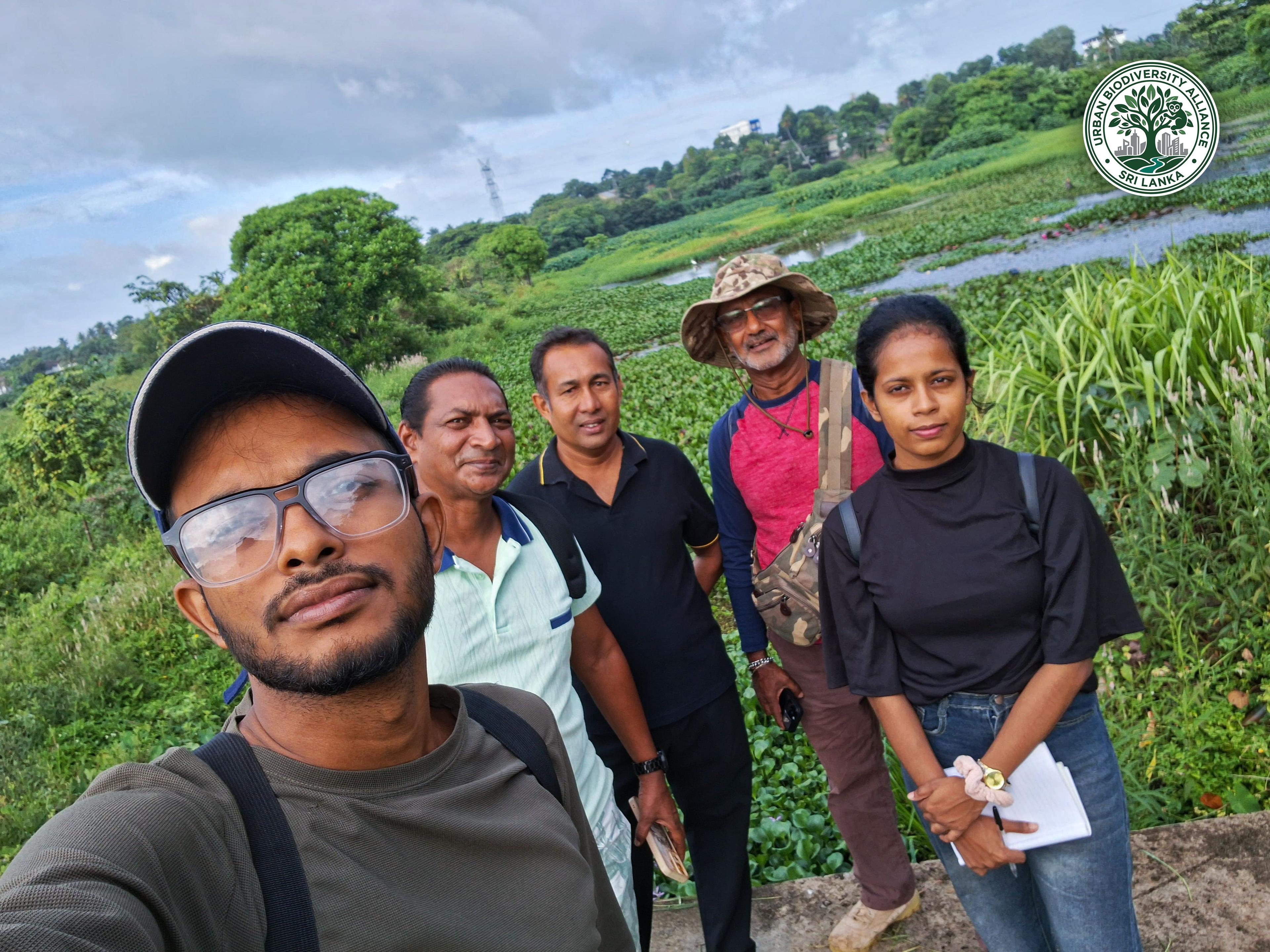
In a city of roads, buildings and paved ground, a wetland is easy to overlook. Yet places like Kimbulawala are often the last spots in Colombo where open water, reeds, marsh and wet soil still come together. Tucked between built-up land and two hotels, this small wetland turns out to be one of the city's richest wildlife refuges.
Our team surveyed Kimbulawala to document what lives there for the first time, and what we found is remarkable.
Why Kimbulawala matters
Kimbulawala is one of the eight named wetlands that make up Colombo's Ramsar Wetland City network which having greater risk of damaging its significances.
Despite its importance, Kimbulawala's plants and animals had never been systematically recorded. Without a reliable inventory, it is hard to protect a place or plan how people can enjoy it responsibly.
Our field visits
The survey was carried out along the site's nature path, a continuous walkway that begins in the south-west beside the hotels, crosses two small bridges, and follows the wetland fringe north to a walking track along the boundary. Along the way it passes open wetland with seven vegetated islands, a stream, a small pond and large areas of abandoned agricultural land.
We set up nine sampling plots at intervals along the path, placed to capture the main habitat changes: wetland fringe, the edges of abandoned fields, areas near the bridges and pond, and the more disturbed zones close to the hotels. Over one full year, we recorded:
Plant surveys recorded every species present at each plot, together with its growth form, origin and conservation status. Birds were identified through direct observation and by their calls, and each species was noted as either a breeding resident or a migrant, along with its feeding habits. Butterflies, dragonflies and damselflies were surveyed by visual encounter while walking along the path, and reptiles were recorded opportunistically whenever they were encountered.
All animals were identified to species level using standard field guides and photographic references, and conservation status was assigned from the national Red List.
What we found: 234 species in a small urban wetland
The survey recorded a total of 234 species belonging to 101 families. Birds were the most diverse group, with 128 species, followed by plants with 55 species and butterflies with 27 species. Fourteen species of dragonflies and damselflies (odonates) were also recorded, along with 10 species of reptiles.
Birds: the stars of the show
With 128 species from 52 families, the birdlife is exceptional for a small wetland surrounded by buildings. Herons and egrets (Ardeidae) were the richest family with 12 species, followed by sandpipers and their relatives (Scolopacidae) and rails and crakes (Rallidae) with nine each.
Of the 128 bird species recorded, 91 are breeding residents and 37 are migrants. Seven species are nationally threatened, five of which are listed as Endangered and two as Vulnerable. Notably, four of the five Endangered species depend on reed beds and marsh habitats. Three of the recorded species are endemic to Sri Lanka: the Sri Lanka Swallow, the Red-backed Flameback and the Crimson-fronted Barbet.
Several birds that are uncommon in urban Colombo also turned up, including the Black-capped Kingfisher, Eurasian Coot, Brahminy Starling, Oriental Pratincole, Lesser Cuckoo, Spot-billed Duck and the Peregrine Falcon.
Reptiles, butterflies and dragonflies
Ten reptile species were recorded. Visitors should take care and respect the warning signs recommended for the site.
The path also supports 27 butterflies, led by the brush-footed family Nymphalidae (14 species), and 14 dragonflies and damselflies, nine of them skimmers and darters of the family Libellulidae. All are native species.
Plants: a mix of native and invasive
The 55 plant species from 35 families include 33 native species (60%) and 22 alien species (40%). Two are endemic to Sri Lanka, and two are nationally Vulnerable: Polyalthia suberosa and Cinnamomum verum (true cinnamon).
The worrying news is that ten of the alien plants are invasive. Left unchecked, such plants can choke open water and crowd out the open margins that waders and water birds rely on.
Kimbulawala already attracts birdwatchers and photographers, but its sensitive species require careful management. Home to 234 species, including Endangered birds, it also helps protect Colombo from floods. With formal protection and responsible visitor management, it can serve both wildlife and people.